Search engines have long been the backbone of digital discovery and traffic acquisition for online publishers, e-commerce brands, and content creators. For over two decades, ranking highly in search engine results pages (SERPs) meant consistent organic traffic, brand visibility, and revenue generation. However, the rapid adoption of generative artificial intelligence (AI) in search, particularly through features like AI Overviews (sometimes branded as Google’s Search Generative Experience), has ushered in a seismic shift in user behavior and click patterns.
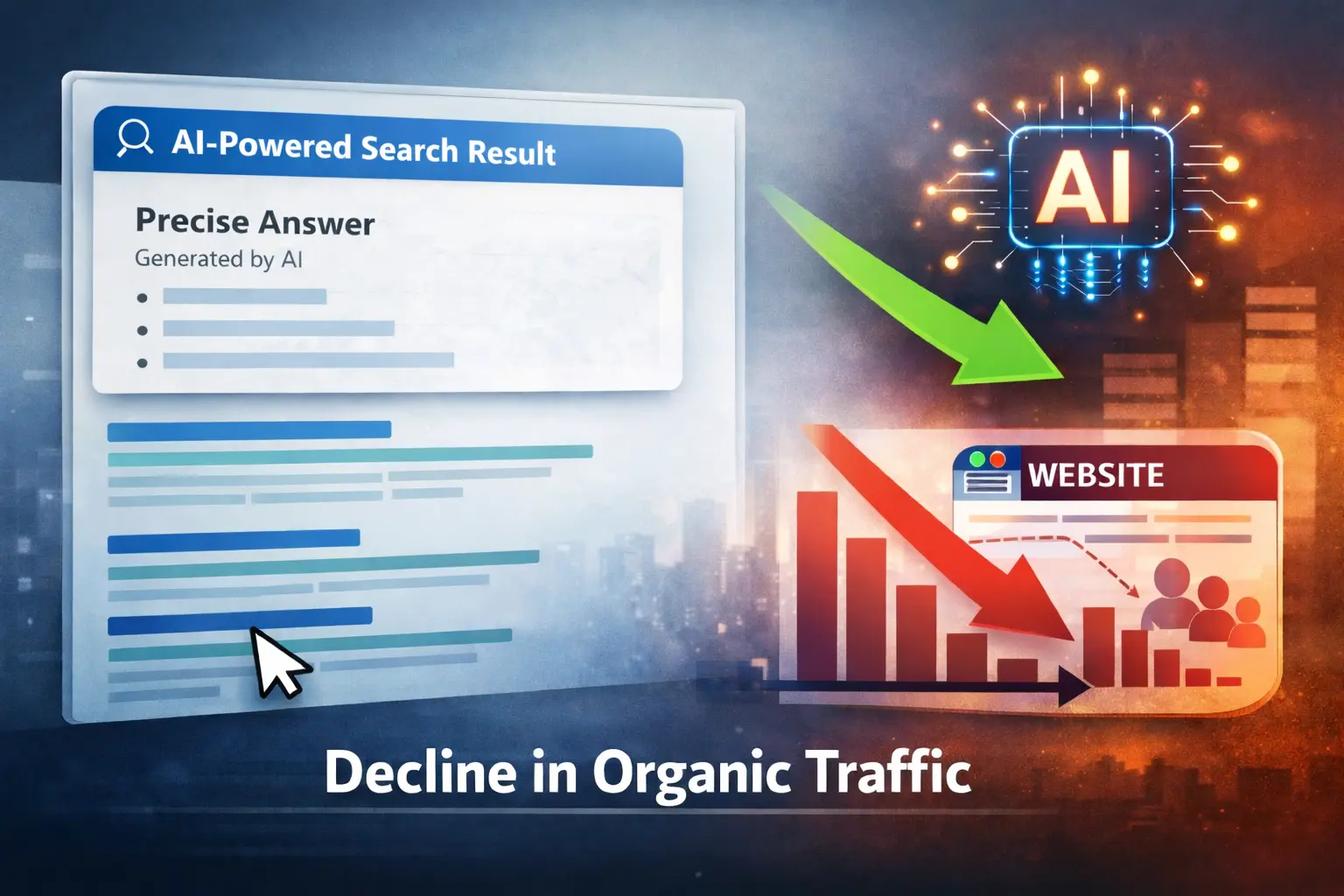
Instead of clicking through to external sites to find answers, users are increasingly receiving answers directly on the search results page. This shift is reshaping SEO, traffic expectations, and how digital businesses must think about visibility and engagement.
This article examines the data, explores what’s driving these changes, and outlines ways publishers and marketers can respond in 2026 and beyond.
What Are AI Overviews and Why They Matter
AI Overviews are AI-generated summaries that appear prominently at the top of search results. They synthesize information from across multiple sources to deliver a concise, context-aware answer to a user’s query. These summaries may include short paragraphs, bullet lists, comparative points, and select citations to web pages that contributed to the answer.
Historically, search engines helped users discover websites; today’s AI Overviews aim to answer queries directly, often without requiring users to click through to an external site. This fundamentally changes the purpose of a Google search page from a navigation hub to a destination in itself.
The modern search experience now includes:
-
AI-generated answers above traditional links
-
Rich results that reduce the need for deeper engagement
-
Zero-click outcomes where users find what they need without any click
This is not a minor update; it represents a structural shift in how search engines function and how traffic flows across the web.
The Data: Organic Traffic Is Declining
Multiple data sources have confirmed that AI Overviews and similar features are eroding traditional organic traffic:
1. Click-Through Rates Collapse
Studies show that when AI Overviews appear for informational queries, organic click-through rates (CTR) drop significantly:
-
One analysis found that organic CTR dropped from about 1.41% to 0.64% for queries where AI Overviews appeared, compared with queries without AI summaries.
-
Other research suggests that top organic CTR on informational queries dropped by nearly 64% in one year.
-
According to a Pew study, users clicked on traditional links only 8% of the time when an AI summary was present, compared with nearly 15% without one.
This reflects a profound shift in attention: users are now far less likely to navigate away from the search page after receiving an AI-generated answer.
2. Zero-Click Searches Are Becoming the Norm
Zero-click searches are those where a user does not click to any external website after a search. These have climbed sharply:
-
Zero-click proportions have risen toward 60–70% of all queries, in part due to the prevalence of AI summaries that satisfy user intent on the SERP itself.
-
Industry analyses now routinely see more than half of all search queries ending without a traditional click.
This dramatically alters the fundamental economics of search traffic: organic visibility no longer guarantees traffic, even if a site ranks first.
3. Organic Referral Traffic Declines Across Sectors
News publishers and informational content sites are among the hardest hit:
-
Surveys of Digital Content Next members showed Google search referral traffic falling 1–25% across most major news and content brands.
-
Specialist educational platforms have reported dramatic declines. For example, Chegg publicly stated that its non-subscriber traffic dropped by around 49% in one year, leading the company to file an antitrust lawsuit related to Google’s AI Overviews.
Retail, entertainment, recipe, and general interest sites are also experiencing material declines in organic traffic year-over-year, with some sites losing 20–40% of their search-driven visitors.
4. Top Sites and Major Publishers Are Affected
News publishers around the world have reported significant traffic drops following the rollout of AI-powered search features:
-
Many top news domains saw year-over-year declines, with some losing over 25–40% of their visits compared with earlier periods.
-
Searches that once drove millions of visits now frequently end on the search page itself.
Even encyclopedic sites like Wikipedia are reporting declines in web traffic attributed to AI summaries delivering answers without requiring a visit.
Why AI Search Is Disruptive
There are several structural reasons for the declining organic traffic trend:
1. Answers Replace Discovery
AI Overviews often provide complete answers directly in the search interface. Users who were once curious enough to click through to an article now stay on the search page because their informational need has already been satisfied. This reduces the incentive to visit external sites.
2. Traditional SEO Signals Are Less Predictive
Standard SEO tactics (keyword targeting, backlink building, content depth) remain relevant for organic listings, but they do not influence whether AI Overviews are shown. AI Overviews may cite content sources based on AI interpretations rather than organic ranking signals, leading to volatility and less predictable traffic patterns.
3. SERP Real Estate Has Shrunk for Blue Links
The increasing display of AI features, featured snippets, knowledge panels, and answer boxes pushes traditional links further down the page—often below the fold. Even a #1 ranking cannot guarantee eyeballs when users encounter rich AI content first.
4. User Behavior Has Shifted
Studies consistently show that users are more satisfied with quick, concise answers, especially when seeking definitions, steps, or straightforward facts. When presented with clear, digestible outputs, users are less motivated to click through for additional context.
What Publishers and Marketers Can Do
Although the landscape has changed, there are proactive strategies publishers and marketers can adopt to sustain visibility and performance.
1. Optimize for AI Visibility
Traditional SEO is still valuable, but publishers should consider:
-
Structuring content to support AI summarization
-
Using clear headers, lists, and concise takeaways that AI systems can extract
-
Implementing schema markup to provide machine-readable context
This can increase the likelihood that your content is referenced or cited by AI-generated summaries.
2. Diversify Traffic Channels
Relying solely on organic search is increasingly risky. Successful publishers are focusing more on:
-
Social media communities
-
Email newsletters
-
Direct engagement
-
Referral partnerships
These channels can buffer against organic search volatility.
3. Prioritize High-Intent and Commercial Queries
AI summaries are most prevalent for informational questions. Content targeting high-intent or transactional keywords (e.g., product comparisons, purchase guides) may still secure meaningful clickthroughs because users seek deeper engagement and conversion information.
4. Measure Beyond Pageviews
Traditional KPIs like pageviews and organic visits should be complemented with broader metrics such as:
-
Brand impressions
-
Assisted conversions
-
Engagement and loyalty
-
Revenue per visitor
These reflect more meaningful business outcomes in a world of fewer outright clicks.
5. Build Content Partnerships and Syndication
Some publishers are exploring formal partnerships or syndication agreements with AI platforms to ensure proper attribution, compensation, and visibility for their content.
Strategic Outlook
The shift toward AI-powered search marks a structural evolution in how people find and consume information online. Traditional search traffic, while not dead, is no longer the reliable growth engine it once was.
Publishers and marketers must adapt to a world where:
-
Users get instant answers without visiting websites
-
Organic rankings do not guarantee clicks
-
New metrics of visibility matter more than raw traffic
This environment demands a broader strategy that embraces AI visibility, diversifies traffic sources, and rethinks how value is measured online. Those who innovate in content delivery, audience engagement, and cross-channel growth will be best positioned to thrive as search continues to evolve.