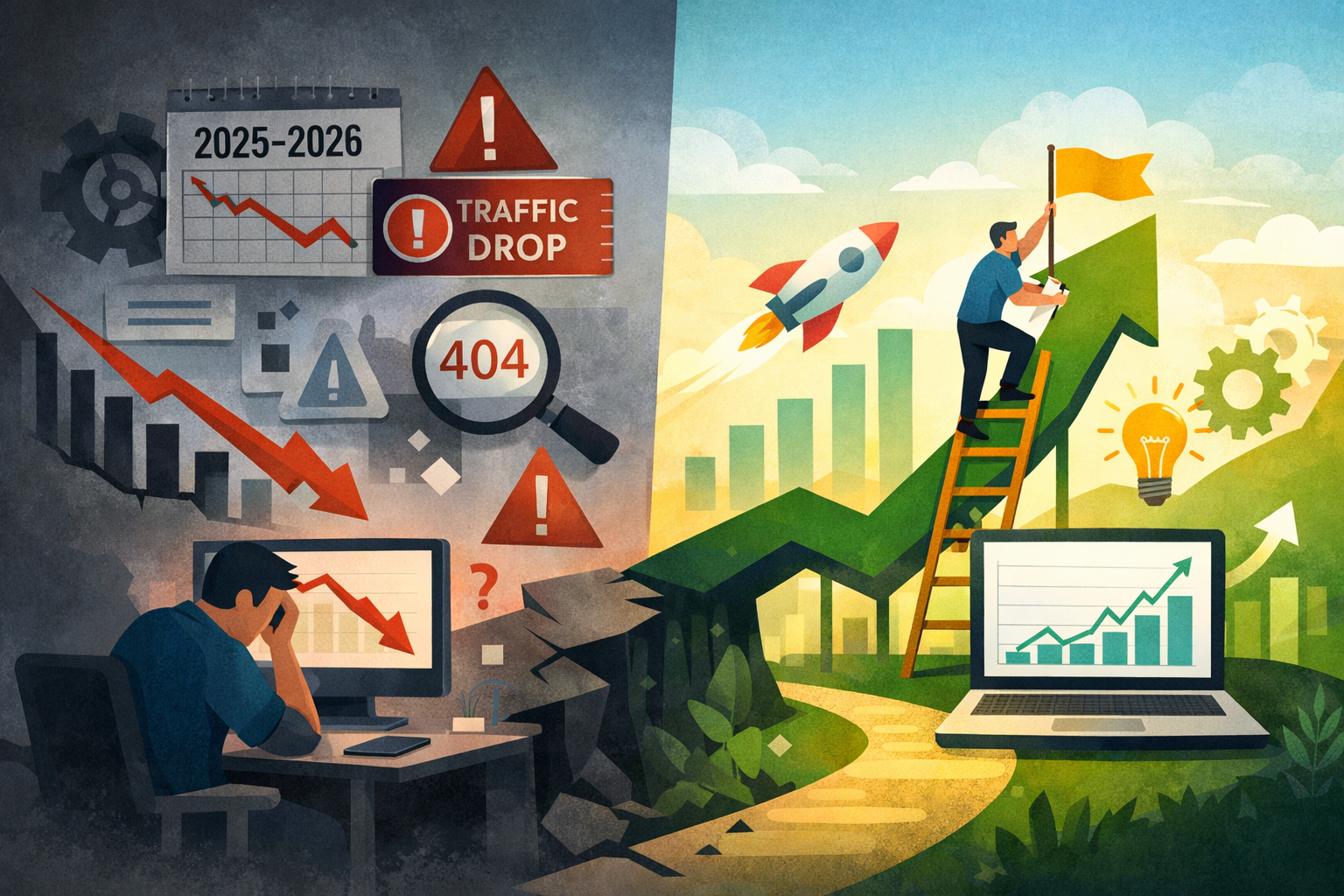
The digital landscape of 2025–26 has proven to be one of the most challenging periods for website owners and digital marketers in recent memory. Countless websites have experienced significant traffic declines, leaving businesses scrambling to understand what went wrong and how to bounce back. This isn’t just about minor fluctuations in visitor numbers, many sites have seen their organic traffic drop by 30%, 50%, or even more, threatening their entire business models.
Understanding why this massive shift occurred and what you can do to recover is essential for any website owner who wants to survive and thrive in this new digital era.
The Perfect Storm: What Caused the Traffic Decline
Several converging factors created a perfect storm that devastated website traffic across the internet. The most significant catalyst was the dramatic evolution of search engines, particularly Google’s ongoing integration of AI-powered search features. Search Generative Experience (SGE) and AI Overviews fundamentally changed how people interact with search results. Instead of clicking through to websites for answers, users increasingly find what they need directly on the search results page. This zero-click search phenomenon has redirected traffic away from traditional websites and kept users within Google’s ecosystem.
Algorithm updates throughout 2024 and into 2025 also played a major role. Google’s continuous refinement of its ranking systems, with a heightened focus on Experience, Expertise, Authoritativeness, and Trustworthiness, meant that websites without strong credibility signals found themselves pushed down in rankings or removed entirely from search results. The updates particularly targeted thin content, AI-generated spam, and sites that didn’t demonstrate clear first-hand expertise.
The rise of AI chatbots like ChatGPT, Claude, and others created an alternative information source that bypassed traditional web search entirely. People began asking AI assistants for information, recipes, advice, and solutions, tasks they previously would have searched Google for and clicked through to websites to find.
Social media platforms also evolved their strategies, keeping users on their platforms longer through enhanced features and integrated shopping experiences. This meant less outbound traffic to external websites, even from social media marketing efforts that previously drove substantial visitor numbers.
Additionally, the increasing dominance of large, established websites with massive domain authority made it harder for smaller sites to compete. Google’s preference for recognized brands meant that even high-quality content from lesser-known sites struggled to rank.
Identifying If Your Site Was Affected
Before implementing recovery strategies, you need to understand the specific nature of your traffic loss. Dive into your analytics and look beyond just the overall traffic number. Examine which pages lost traffic, what keywords you’re no longer ranking for, and whether the decline came from organic search, referral traffic, social media, or direct visits.
Check your Google Search Console data to see if your impressions dropped (meaning you’re appearing less in search results) or if your click-through rate declined (meaning you’re still appearing but people aren’t clicking). These indicate different problems requiring different solutions.
Look at your competitor landscape. If similar sites in your niche also experienced declines, it might be an industry-wide shift. If competitors gained traffic while you lost it, they’re likely doing something you’re not.
Strategic Recovery: The Path Forward
Recovering from significant traffic loss requires a comprehensive, multi-pronged approach. There’s no single magic bullet, but rather a combination of strategies that work together to rebuild your digital presence.
First and foremost, audit and enhance your content quality. This means going beyond surface-level improvements. Every piece of content on your site should demonstrate genuine expertise and provide value that AI summaries and featured snippets cannot replicate. Add personal experiences, case studies, original research, and unique insights that only you can provide. Update outdated content with current information, expand thin pages, and remove or consolidate low-quality content that might be dragging down your site’s overall quality perception.
Strengthen your expertise signals by prominently displaying author credentials, creating detailed about pages, showcasing real results and testimonials, and building your brand’s reputation both on and off your site. Google is increasingly looking for signs that real experts created your content, not just anyone with basic knowledge of a topic.
Diversify your traffic sources immediately. Relying solely on Google organic search is now far too risky. Build an email list and nurture it with valuable content so you own a direct connection to your audience. Develop a presence on multiple social media platforms where your target audience spends time. Explore partnerships, guest posting, and collaborations with other sites in your industry. Consider paid advertising to supplement organic traffic while you rebuild.
Focus on user experience and technical SEO fundamentals. Ensure your site loads quickly, works flawlessly on mobile devices, has clear navigation, and provides an excellent experience that encourages visitors to stay longer and return frequently. Technical issues like crawl errors, broken links, and poor site structure can significantly impact your rankings.
Create content specifically designed to capture traffic that AI overviews might miss. This includes highly specific, long-tail content, interactive tools and calculators, comprehensive comparison guides, and content that requires human judgment or personal preference. Think about questions that require nuanced answers rather than simple facts.
Build genuine authority through digital PR, getting mentioned and linked to by reputable publications in your industry. One high-quality link from a trusted source can be worth more than dozens of mediocre links. Focus on creating genuinely newsworthy content or offering expert commentary on industry developments.
Looking Ahead: Adapting to the New Reality
The changes we’ve seen in 2025–26 aren’t temporary fluctuations, they represent a fundamental shift in how the internet works. Recovery isn’t about returning to how things were but about adapting to the new reality. Websites that thrive going forward will be those that offer something genuinely unique and valuable, build direct relationships with their audiences, and don’t rely on any single traffic source.
The websites that successfully navigate this challenging period will emerge stronger, more resilient, and better positioned for whatever changes come next in the ever-evolving digital landscape.