How to Turn Organic Traffic into Sales-Ready Leads


Congratulations, your SEO efforts are paying off, and organic traffic is flowing to your website. You’re watching those visitor numbers climb, and it feels like progress. But here’s the uncomfortable truth that many marketers eventually face: traffic without conversions is just a vanity metric. Unless those visitors are transforming into sales-ready leads that your team can actually close, all that traffic represents wasted potential and missed revenue.


The gap between attracting visitors and generating qualified leads is where most businesses struggle. People land on your site, consume some content, and disappear, never to be heard from since. They don’t fill out forms, don’t request demos, don’t engage with your sales team, and don’t become customers. They’re just ghosts passing through your analytics dashboard.


Turning organic traffic into sales-ready leads isn’t about luck or hoping the right people stumble upon your contact form. It requires strategic planning, psychological understanding of buyer behavior, and systematic optimization of every touchpoint in the visitor journey. Let’s explore exactly how to bridge this critical gap and transform your organic traffic into a predictable pipeline of qualified opportunities.


Understanding What Makes a Lead “Sales-Ready”


Before diving into conversion tactics, you need clarity on what constitutes a sales-ready lead for your business. Not all leads are created equal, and passing poorly qualified contacts to your sales team wastes everyone’s time and erodes trust between marketing and sales departments.


Sales-ready leads typically meet specific criteria that indicate genuine purchase potential. They have a clearly defined problem or need that your solution addresses, possess budget authority or access to decision-makers who control budgets, operate within your ideal customer profile regarding company size, industry, or other qualifying factors, demonstrate timeline urgency indicating they’re actively seeking solutions rather than casually browsing, and show engagement signals suggesting serious interest rather than passive information gathering.


Defining these criteria explicitly, ideally in collaboration with your sales team, creates alignment on what marketing should actually be delivering. This shared understanding prevents the common scenario where marketing celebrates lead volume while sales complains about lead quality.

Segmenting Traffic by Intent and Qualification Potential


Not every visitor arriving via organic search has equal potential to become a sales-ready lead. Someone searching “what is content marketing” is in a very different place than someone searching “enterprise content marketing platform pricing comparison.” Your conversion strategy must account for these intent differences.


Implement traffic segmentation based on the search queries and pages driving visits. Create distinct conversion paths for top-of-funnel educational content where visitors are just beginning to understand their problems, middle-of-funnel consideration content where prospects are evaluating different solution approaches, and bottom-of-funnel decision content where they’re comparing specific vendors and ready to engage.


Use behavior-based segmentation to identify high-intent visitors. Someone who visits your pricing page, reads three case studies, and downloads a product comparison guide is demonstrating significantly higher purchase intent than someone who reads one blog post and leaves. Your conversion mechanisms should reflect these behavioral signals, presenting more aggressive calls-to-action to high-intent visitors while nurturing early-stage visitors with less demanding asks.


Creating Conversion-Optimized Content Experiences


The content that ranks well in search engines must do double duty, satisfying both search algorithms and visitor conversion goals. Too many companies treat these as separate objectives, creating SEO content that ranks but doesn’t convert, or sales-focused landing pages that never attract organic traffic. Excellence requires integrating both purposes seamlessly.


Structure your content to guide visitors toward conversion naturally. Start with valuable information that fulfills their search intent, building trust and demonstrating expertise. Then transition smoothly into how your solution addresses the problems you’ve discussed, making the connection between their needs and your offering feel like a natural progression rather than an abrupt sales pitch.


Embed strategic conversion opportunities throughout your content rather than relegating them to a single form at the bottom. Include relevant calls-to-action in contextually appropriate places, a comparison guide mentioned within an article about evaluation criteria, a calculator tool referenced when discussing ROI considerations, or a case study showcased when addressing implementation concerns. These contextual offers convert better because they feel helpful rather than interruptive.


Design content upgrades specifically aligned with each piece of content. Someone reading “The Complete Guide to Email Deliverability” might readily exchange their email address for a downloadable checklist, template, or advanced resource on the same topic. This content-specific approach converts far more effectively than generic newsletter signup requests.


Implementing Progressive Profiling and Lead Nurturing


The biggest conversion killer is asking for too much information too soon. Lengthy forms demanding job titles, company size, budget ranges, and detailed requirements before providing any value create massive friction. Most visitors simply abandon rather than complete these interrogations.


Instead, implement progressive profiling that gathers information gradually over multiple interactions. The first conversion might request only an email address in exchange for valuable content. Subsequent interactions can request additional details as the relationship and trust deepen. This approach maximizes initial conversion rates while still ultimately collecting the qualification information your sales team needs.


Develop automated nurturing sequences that continue educating and qualifying leads after initial conversion. Someone who downloads an introductory guide receives follow-up emails with progressively more advanced content, case studies demonstrating results, and eventually direct offers for consultations or demos. This nurturing accomplishes two goals, it keeps your brand top-of-mind as prospects move through their buying journey, and it allows behavioral tracking that identifies when leads become sales-ready based on their engagement patterns.


Score leads based on both demographic information and behavioral signals. Assign points for company characteristics that match your ideal customer profile, and add points for high-intent behaviors like visiting pricing pages, watching product videos, downloading comparison guides, or repeatedly returning to your site. When lead scores reach defined thresholds, they trigger handoff to sales as qualified opportunities.


Optimizing Conversion Points for Maximum Impact


Every conversion element on your site deserves testing and optimization. Small improvements in conversion rates compound dramatically across thousands of monthly visitors. A landing page converting at two percent versus three percent means fifty percent more leads from the same traffic, that’s substantial business impact from seemingly modest optimization.


Test your calls-to-action systematically. Experiment with different button copy, “Get Started” versus “Request Demo” versus “See Pricing” can produce surprisingly different results. Try various button colors, sizes, and placements. Test whether multiple CTAs throughout a page outperform a single prominent one.


Optimize your forms ruthlessly. Every additional form field decreases completion rates. Question whether you truly need each piece of information at the initial conversion point, or whether you could gather it later. Test multi-step forms against single-page forms, sometimes breaking a long form into multiple short steps actually increases completion by reducing perceived effort.


Reduce anxiety and build trust at conversion points. Include trust signals like customer logos, testimonials, security badges, and privacy assurances near your forms. Make it explicitly clear what happens after form submission, will they receive an immediate download, schedule a call, or get an email? Uncertainty breeds hesitation.


Ensure your conversion mechanisms work flawlessly across all devices. Mobile traffic often represents half or more of organic visitors, yet many conversion forms remain mobile-hostile. Test your entire conversion process on smartphones and tablets, identifying and eliminating any friction points.


Leveraging Retargeting and Multi-Touch Engagement


Most visitors won’t convert on their first visit, but that doesn’t mean they’re lost opportunities. Implement strategic retargeting to re-engage visitors who showed interest but didn’t convert initially.


Build retargeting audiences based on specific behaviors and pages visited. Someone who viewed your pricing page deserves different messaging than someone who only read a blog post. Create segmented campaigns that speak to where visitors are in their journey and what they’ve already learned about your solution.


Use email retargeting when you’ve captured addresses through early-stage content offers. If someone downloaded a guide but hasn’t taken further action, automated sequences can provide additional value while gradually introducing more conversion-focused offers. The key is providing genuine value in each touch rather than just repeatedly asking for the sale.


Implement exit-intent technology that detects when visitors are about to leave and presents targeted offers at that moment. This might be a content upgrade, a limited-time consultation offer, or a simple email subscription invitation. While exit-intent can feel aggressive if overused, strategic deployment captures conversions that would otherwise be completely lost.


Creating Friction-Free Paths to Sales Conversations


For high-value B2B products or complex services, the ultimate conversion goal is often getting prospects into direct sales conversations. Make this path as friction-free as possible for visitors demonstrating high intent.


Implement conversational tools like live chat or chatbots that engage visitors in real-time. Someone spending ten minutes on your pricing page is probably interested, proactive chat invitations at opportune moments can convert fence-sitters into conversations. Ensure these tools qualify visitors appropriately rather than just collecting contact information for follow-up that may never happen.


Offer flexible engagement options that respect different communication preferences. Some prospects prefer scheduling formal demos, others want quick phone conversations, and many appreciate the ability to start with asynchronous communication like email or recorded video presentations. Providing options increases conversion by accommodating individual preferences.


Reduce scheduling friction by using calendar tools that let prospects book time directly rather than enduring back-and-forth email exchanges finding mutual availability. Every additional interaction required to complete a conversion creates opportunity for prospects to disengage or deprioritize.


Measuring and Optimizing the Complete Funnel


Turning organic traffic into sales-ready leads requires measuring and optimizing the complete conversion funnel, not just individual metrics in isolation. Track visitor-to-lead conversion rates overall and by traffic source, page, and visitor segment. Monitor lead-to-opportunity conversion rates to understand what percentage of marketing leads actually qualify for sales engagement. Measure opportunity-to-customer conversion to determine which lead sources ultimately produce revenue.


Identify drop-off points in your funnel. Are visitors bouncing from landing pages without scrolling? Are they abandoning forms halfway through? Are qualified leads failing to respond to sales outreach? Each drop-off point represents optimization opportunity.


Calculate the revenue value of conversion rate improvements. Understanding that increasing your landing page conversion rate from two to three percent would generate X additional qualified leads worth Y potential revenue helps prioritize optimization efforts and justify investment in conversion rate optimization resources.


Building a Conversion-Focused Culture


Ultimately, turning organic traffic into sales-ready leads isn’t about implementing a few tactical tricks, it’s about building an organizational culture that obsesses over conversion at every step. This means continuously testing and improving conversion elements, aligning marketing and sales around lead qualification criteria, creating feedback loops where sales insights inform marketing optimization, investing in the tools and technologies that enable sophisticated conversion tracking and automation, and maintaining patience through the iterative process of funnel optimization.


Your organic traffic represents enormous potential, visitors who found you because they were actively searching for solutions to problems you can solve. Converting that potential into revenue-generating leads isn’t magic; it’s methodical optimization of every touchpoint in the journey from stranger to sales-ready prospect. Start measuring your current conversion performance, identify the biggest gaps, and systematically work to bridge them. The leads, and revenue, will follow.
B2B SEO Strategy That Actually Generates Leads


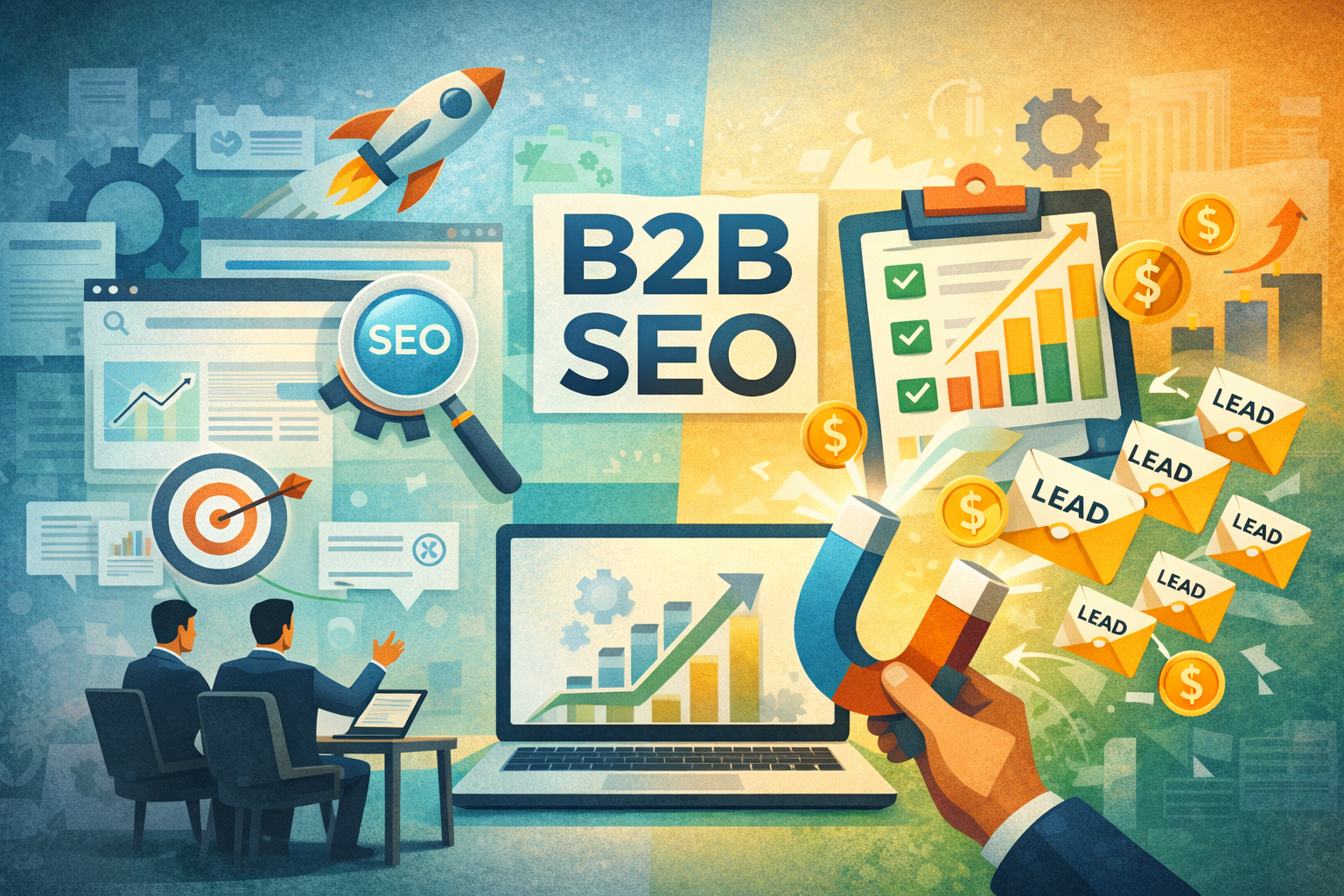
In the B2B world, driving traffic to your website is only half the battle, the real challenge is converting that traffic into qualified leads that your sales team can actually work with. Too many B2B companies invest heavily in SEO, celebrate their ranking improvements and traffic increases, yet remain frustrated by the lack of tangible business results. The harsh reality is that not all SEO strategies are created equal, and what works for B2C or informational websites rarely translates effectively to B2B lead generation.


The difference between SEO that generates vanity metrics and SEO that generates revenue lies in strategic alignment with the B2B buyer journey, understanding decision-maker intent, and creating content that doesn’t just inform but persuades and converts. Let’s explore how to build a B2B SEO strategy that actually moves the needle on your bottom line.


Understanding the B2B Buyer Journey and Search Behavior


B2B purchases are fundamentally different from consumer purchases. They involve multiple stakeholders, longer decision cycles, higher price points, and more complex evaluation processes. Your SEO strategy must account for these realities rather than treating B2B searches like consumer queries.


The typical B2B buyer journey spans several months and involves awareness stage research where potential buyers identify problems and explore solutions, consideration stage evaluation where they compare different approaches and vendors, and decision stage selection where they narrow choices and seek specific vendor information. Each stage requires different content and different SEO targeting.


B2B searchers use distinctly different language than consumers. They employ industry-specific terminology and jargon, search for detailed specifications and technical information, look for ROI calculators and business case justifications, seek peer reviews and case studies, and research vendor comparisons and alternatives. Your keyword strategy must reflect this professional, research-intensive search behavior.


Understanding that B2B decision-makers rarely convert on their first visit is crucial. They’ll visit your site multiple times, consuming different content pieces as they progress through their evaluation. Your SEO strategy needs to capture them early and keep them engaged throughout this extended journey.


Targeting High-Intent, Bottom-Funnel Keywords


While educational content has its place, B2B lead generation requires prioritizing keywords that indicate buying intent. Focus on solution-aware searches where prospects know they need a specific type of solution, comparison keywords where they’re evaluating different vendors or approaches, alternative searches where they’re looking for competitors to their current solution, and implementation queries where they’re researching how to deploy or use solutions.


These bottom-funnel keywords typically have lower search volumes than broad, informational terms, but they convert at dramatically higher rates. A keyword like “enterprise marketing automation platform comparison” might only get two hundred searches monthly, but those searchers are actively evaluating solutions and could be worth thousands or millions in potential revenue.


Create dedicated pages for these high-intent keywords. Don’t bury this content in blog posts, give it prominent placement with clear conversion paths. Include detailed product information, competitive differentiators, pricing transparency where appropriate, customer testimonials and case studies, and prominent calls-to-action for demos, consultations, or free trials.


Creating Content That Qualifies and Converts Leads


B2B SEO content must do more than rank and attract clicks, it must educate, build trust, and move prospects toward conversion. This requires a sophisticated content approach that combines SEO optimization with persuasive copywriting and strategic conversion design.


Develop comprehensive buying guides that help prospects understand their options and evaluation criteria while subtly positioning your solution favorably. Create detailed comparison content that honestly addresses how your solution stacks up against competitors, acknowledging where others might excel while highlighting your unique strengths. Prospects will research competitors anyway, better they do it on your site where you control the narrative.


Problem-focused content that addresses specific pain points your target audience faces works exceptionally well for B2B lead generation. When someone searches “how to reduce customer churn in SaaS,” they’re signaling a real business problem. Content that thoroughly addresses this problem and presents your solution as the answer naturally generates qualified leads.


Case studies optimized for search remain one of the most powerful B2B SEO assets. Prospects searching for “company X case study” or “industry Y success stories” are deep in their evaluation process. Detailed case studies that showcase measurable results, explain your process, and demonstrate ROI provide the social proof that converts browsers into leads.


ROI calculators, assessment tools, templates, and other interactive resources serve dual purposes, they attract links and traffic while functioning as lead magnets. Someone who invests time using your ROI calculator or assessment tool is highly engaged and willing to provide contact information for personalized results.


Optimizing for Decision-Makers, Not Just SEO


B2B SEO must consider who is actually searching and what they need to see to take action. Entry-level employees might do initial research, but decisions often rest with managers, directors, or executives. Your content needs to speak to multiple organizational levels while making it easy for decision-makers to quickly extract the information they need.


Executive-friendly content uses clear formatting with executive summaries at the top, bullet points highlighting key takeaways, sections that allow for quick scanning, data and statistics that support business cases, and links to more detailed technical content for those who want deeper information. Respect that senior decision-makers have limited time but high expectations for quality and relevance.


Address common objections and concerns directly within your content. B2B buyers are risk-averse and need reassurance about implementation complexity, integration capabilities, support and training resources, security and compliance, vendor stability and longevity, and total cost of ownership. Content that proactively addresses these concerns removes barriers to conversion.


Technical SEO That Supports Lead Generation


Technical SEO takes on heightened importance in B2B contexts where site visitors are evaluating your company’s competence and professionalism. A slow, poorly functioning website signals operational incompetence to prospects considering a business relationship. Ensure your site loads quickly even with resource-intensive content, functions flawlessly across devices, maintains security with HTTPS and trust signals, and provides intuitive navigation that helps visitors find relevant information quickly.


Implement schema markup strategically to enhance your search presence. Use Organization schema to display your company information, Product schema for specific solutions, FAQ schema to capture featured snippets, Review schema to showcase ratings and testimonials, and Article schema for blog and resource content. Rich snippets increase click-through rates and establish credibility directly in search results.


Create clean, logical site architecture that reflects how prospects think about your solutions. Your navigation and URL structure should mirror your service offerings and make it obvious how to find relevant information. Confusion costs conversions.


Conversion Rate Optimization for B2B SEO Traffic


Driving qualified traffic accomplishes nothing if your conversion mechanisms fail. Every page ranking for your target keywords needs clear, appropriate calls-to-action. Not every page requires the same conversion goal, early-stage content might aim for newsletter signups or content downloads, while bottom-funnel pages should push for demos, consultations, or trial signups.


Reduce friction in your conversion process. Long forms asking for excessive information kill B2B conversions. Request only what you genuinely need for initial qualification. You can gather more information later in the nurturing process. Test different form lengths, CTA placements, button copy, and page layouts systematically to improve conversion rates.


Implement lead scoring and qualification mechanisms so your sales team receives genuinely qualified leads rather than information seekers. Someone downloading a general ebook scores differently than someone requesting a custom demo or using your ROI calculator. Prioritize leads based on their actions and the content they’ve consumed.


Measuring What Actually Matters


B2B SEO success isn’t measured by traffic or rankings alone, it’s measured by business impact. Track organic traffic by funnel stage, understanding how much awareness versus consideration versus decision-stage traffic you’re generating. Monitor lead quantity and quality from organic sources, including how many marketing-qualified and sales-qualified leads SEO generates.


Measure conversion rates at each stage of your funnel. Where are prospects dropping off? Which content effectively moves people to the next stage? Calculate customer acquisition cost for organic leads and compare lifetime value. Track keyword rankings, but focus on high-intent, commercial terms rather than vanity keywords. Monitor which content pieces assist in conversions even if they’re not the final touchpoint.


Most importantly, maintain regular communication with your sales team. Are the leads SEO generates actually converting to customers? What quality signals differentiate good leads from poor ones? This feedback loop ensures your SEO strategy remains aligned with actual revenue generation rather than just marketing metrics.


Building a Sustainable Lead Generation Engine


Effective B2B SEO isn’t a quick win, it’s a sustained investment that compounds over time. Content you create today continues generating leads months and years later. Rankings you establish create ongoing visibility without continued ad spend. Authority you build makes future content easier to rank.


Start by focusing on your highest-value offerings and most qualified prospects. Create exceptional content targeting the searches these ideal customers perform during their buying journey. Optimize relentlessly for conversion, not just traffic. Measure business outcomes, not vanity metrics. And remain patient, B2B SEO that generates meaningful lead volume typically requires six to twelve months of consistent effort before reaching critical mass.


The companies winning at B2B SEO in 2026 aren’t chasing algorithm hacks or gaming the system. They’re creating genuinely valuable content that helps prospects make informed decisions while strategically guiding them toward solutions. That’s the B2B SEO strategy that actually generates leads.

Topical Authority vs Keywords: What Google Prefers in 2026


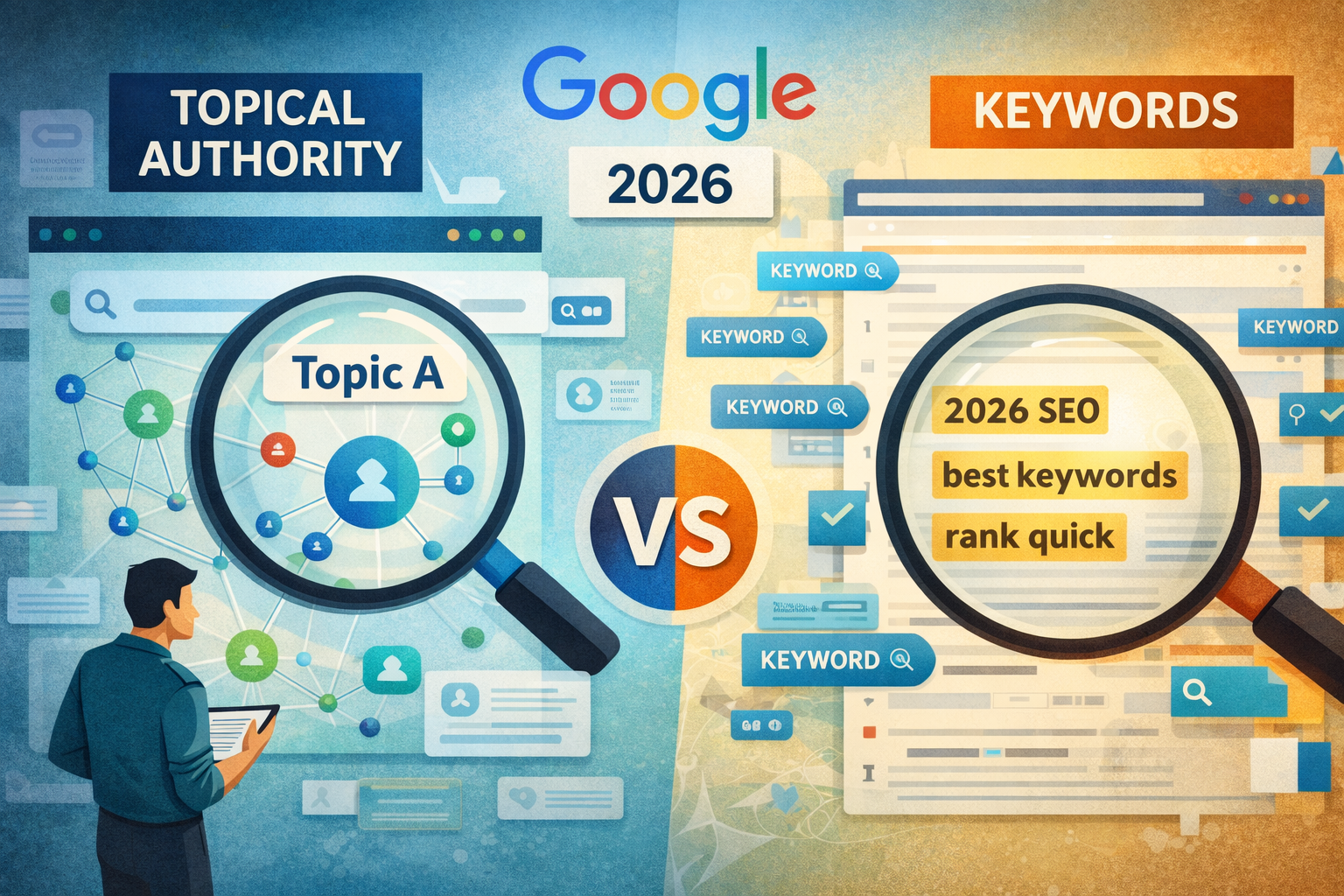
The SEO landscape has undergone a seismic shift, and the old playbook of keyword stuffing and exact-match optimization is not just outdated,it’s actively harmful to your rankings. As we navigate through 2026, Google’s algorithms have become increasingly sophisticated, prioritizing something far more nuanced than simple keyword matching: topical authority. Understanding this shift and adapting your content strategy accordingly isn’t optional anymore; it’s the difference between thriving in search results and becoming invisible.


For years, SEO practitioners obsessed over keywords. They meticulously researched search volumes, analyzed keyword difficulty scores, and strategically placed exact-match phrases throughout their content. While this approach had its time and place, Google’s evolution has rendered this narrow focus insufficient and, in many cases, counterproductive.


Understanding Topical Authority: The New SEO Foundation


Topical authority refers to Google’s perception of your website as a comprehensive, trustworthy resource on a particular subject or cluster of related subjects. It’s not about ranking for one keyword or even a handful of keywords, it’s about demonstrating deep, broad expertise across an entire topic area.


When your site has strong topical authority, Google understands that you’re not just creating scattered content to chase traffic. Instead, you’ve built a knowledge hub that thoroughly covers a subject from multiple angles, answers related questions comprehensively, and provides genuine value to users seeking information in that domain.


Think of it this way: if someone searches for information about sustainable gardening, Google doesn’t just want to show them a single article about “how to start a sustainable garden.” It wants to direct them to a website that covers sustainable gardening comprehensively, soil health, composting methods, water conservation, native plants, organic pest control, seasonal planning, and everything in between. That’s topical authority.


Why Google Made This Shift


Google’s ultimate goal has always been to provide the best possible answers to user queries. The company realized that websites focusing narrowly on individual keywords often created thin, fragmented content that didn’t truly serve users’ needs. Someone searching for information rarely has just one isolated question, they typically need comprehensive understanding.


Additionally, the rise of AI-generated content flooded the internet with keyword-optimized but shallow articles. Google needed more sophisticated ways to distinguish genuinely valuable resources from content farms gaming the system with keyword manipulation.


The integration of natural language processing, BERT, MUM, and other advanced AI technologies into Google’s algorithms enabled the search engine to understand context, relationships between concepts, and the depth of coverage a website provides. Google can now evaluate whether your site demonstrates true expertise or just surface-level keyword targeting.


The Limitations of Keyword-Only Strategies in 2026


Relying solely on keyword research and optimization in 2026 comes with significant drawbacks. Keyword-focused content tends to be narrow and transactional, missing the broader context users actually need. When you optimize a single page for a single keyword, you create isolated islands of content that don’t connect to form a cohesive knowledge base.


This approach also makes you vulnerable to algorithm updates. Google continuously refines how it evaluates content quality, and keyword-stuffed pages that lack depth are often the first casualties of these updates. You might rank well temporarily, but sustained success requires more substance.


Furthermore, keyword-only strategies often lead to keyword cannibalization, where multiple pages on your site compete for the same terms, confusing Google about which page should rank and ultimately weakening all of them. They also fail to capture the long-tail variations and semantic searches that increasingly dominate how people actually use search engines.


Perhaps most importantly, keyword-focused content rarely builds brand loyalty or establishes you as a trusted authority. Visitors who land on a thin, keyword-optimized page get their answer and leave, never returning. They don’t remember your brand or trust you for future information needs.


How to Build Topical Authority: A Comprehensive Approach


Building topical authority requires strategic planning and consistent execution. Start by choosing your topic pillars carefully, select two to five broad subject areas where you can genuinely demonstrate expertise and that align with your business goals. Trying to be an authority on too many unrelated topics dilutes your efforts and confuses both Google and your audience.


Once you’ve identified your pillars, create a content hub architecture. For each pillar topic, develop a comprehensive pillar page that provides a thorough overview of the entire subject. This should be substantial, typically three thousand to five thousand words or more, covering all major subtopics and serving as the authoritative guide.


From this pillar page, create cluster content, detailed articles that dive deep into specific subtopics. Each cluster article should thoroughly explore one aspect of the broader pillar topic and link back to the pillar page. The pillar page should also link out to all relevant cluster content, creating a tightly interconnected web of related information.


Cover your chosen topics exhaustively. Don’t just write about the popular, high-volume keywords. Address the questions beginners ask, the advanced concepts experts want to explore, the common problems people face, the tools and resources they need, and the emerging trends in your field. This comprehensive coverage signals to Google that you’re a genuine authority.


Maintain content quality consistently across all your topical content. Every piece should demonstrate expertise, incorporate original insights or research, provide practical value users can act on, and be well-written and properly structured. Consistency in quality reinforces your authority far more effectively than occasional exceptional pieces surrounded by mediocre content.


The Role of Keywords Within Topical Authority


This doesn’t mean keywords are irrelevant, far from it. Keywords remain important, but their role has evolved. Instead of being the foundation of your strategy, they’re now tools for understanding user intent and ensuring your comprehensive topical content addresses the specific ways people search for information.


Use keyword research to identify the questions and subtopics you should cover within your pillar content. Look for semantic variations and related terms that indicate what aspects of your topic matter most to users. Incorporate keywords naturally within your comprehensive content rather than forcing them artificially.


The key difference is that you’re no longer creating individual pages to target individual keywords. Instead, you’re building comprehensive resources that naturally rank for hundreds of related keywords because they thoroughly cover the topic.


Measuring Topical Authority Success


Traditional keyword ranking tracking still has value, but it’s no longer the primary success metric. Instead, monitor your overall visibility for topic-related searches across many keywords, not just a few targets. Track whether you’re ranking for informational queries, comparison searches, and various long-tail variations related to your pillar topics.


Observe your internal linking structure and how well your content clusters connect. Strong topical authority creates a web where users and search engines can easily navigate between related pieces of content. Watch for increasing traffic to multiple pages within a topic cluster rather than just one or two top-performing pages.


Pay attention to user engagement metrics, time on site, pages per session, and return visitor rates. When you’ve built true topical authority, users recognize your site as valuable and return for additional information, exploring multiple articles during their visits.


The Future-Proof Strategy


As we progress through 2026 and beyond, the trend toward topical authority will only intensify. Google’s algorithms continue evolving toward understanding content at a conceptual level rather than just matching keywords. Websites that establish themselves as comprehensive, authoritative resources in specific domains will increasingly dominate search results.


The transition from keyword-focused SEO to authority-based SEO requires more initial effort and strategic thinking, but it creates sustainable, long-term results that aren’t vulnerable to every algorithm tweak. Build your expertise, cover your topics thoroughly, and let keywords guide rather than dictate your content strategy. That’s what Google prefers in 2026, and that’s what will drive your success.

Why Many Websites Lost Traffic in 2025–26 and How to Recover


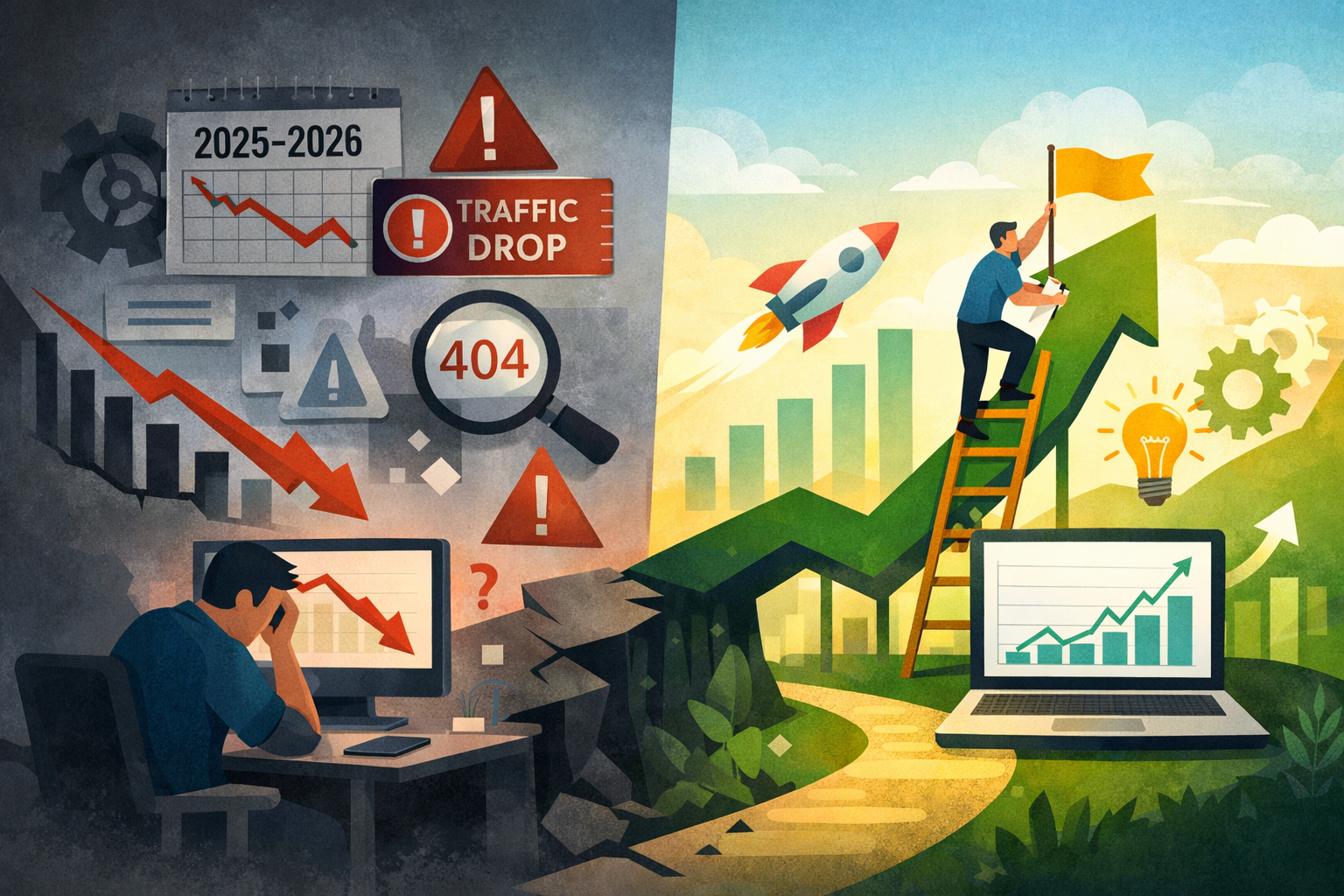
The digital landscape of 2025–26 has proven to be one of the most challenging periods for website owners and digital marketers in recent memory. Countless websites have experienced significant traffic declines, leaving businesses scrambling to understand what went wrong and how to bounce back. This isn’t just about minor fluctuations in visitor numbers, many sites have seen their organic traffic drop by 30%, 50%, or even more, threatening their entire business models.


Understanding why this massive shift occurred and what you can do to recover is essential for any website owner who wants to survive and thrive in this new digital era.


The Perfect Storm: What Caused the Traffic Decline


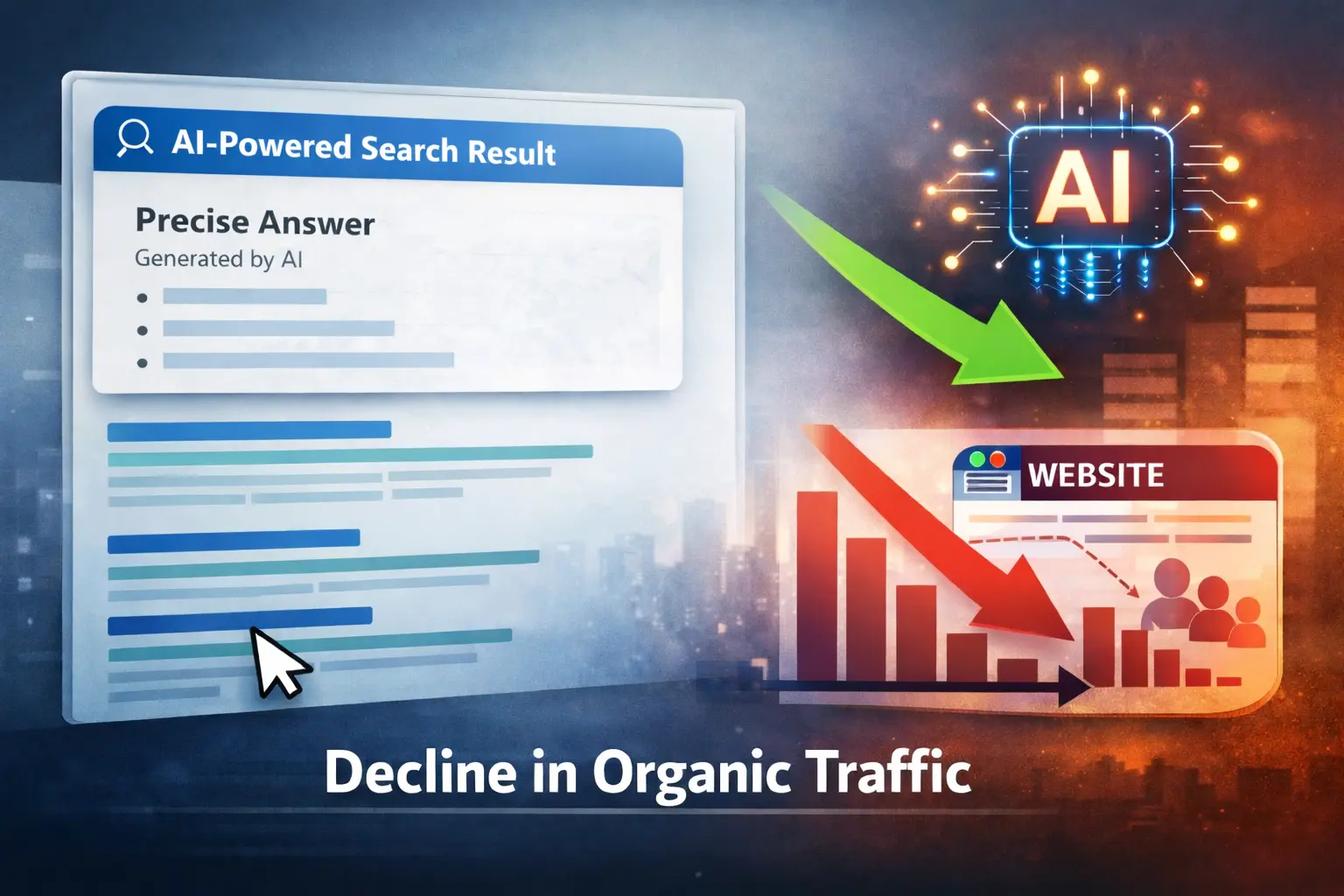
Several converging factors created a perfect storm that devastated website traffic across the internet. The most significant catalyst was the dramatic evolution of search engines, particularly Google’s ongoing integration of AI-powered search features. Search Generative Experience (SGE) and AI Overviews fundamentally changed how people interact with search results. Instead of clicking through to websites for answers, users increasingly find what they need directly on the search results page. This zero-click search phenomenon has redirected traffic away from traditional websites and kept users within Google’s ecosystem.


Algorithm updates throughout 2024 and into 2025 also played a major role. Google’s continuous refinement of its ranking systems, with a heightened focus on Experience, Expertise, Authoritativeness, and Trustworthiness, meant that websites without strong credibility signals found themselves pushed down in rankings or removed entirely from search results. The updates particularly targeted thin content, AI-generated spam, and sites that didn’t demonstrate clear first-hand expertise.


The rise of AI chatbots like ChatGPT, Claude, and others created an alternative information source that bypassed traditional web search entirely. People began asking AI assistants for information, recipes, advice, and solutions, tasks they previously would have searched Google for and clicked through to websites to find.


Social media platforms also evolved their strategies, keeping users on their platforms longer through enhanced features and integrated shopping experiences. This meant less outbound traffic to external websites, even from social media marketing efforts that previously drove substantial visitor numbers.


Additionally, the increasing dominance of large, established websites with massive domain authority made it harder for smaller sites to compete. Google’s preference for recognized brands meant that even high-quality content from lesser-known sites struggled to rank.


Identifying If Your Site Was Affected


Before implementing recovery strategies, you need to understand the specific nature of your traffic loss. Dive into your analytics and look beyond just the overall traffic number. Examine which pages lost traffic, what keywords you’re no longer ranking for, and whether the decline came from organic search, referral traffic, social media, or direct visits.


Check your Google Search Console data to see if your impressions dropped (meaning you’re appearing less in search results) or if your click-through rate declined (meaning you’re still appearing but people aren’t clicking). These indicate different problems requiring different solutions.


Look at your competitor landscape. If similar sites in your niche also experienced declines, it might be an industry-wide shift. If competitors gained traffic while you lost it, they’re likely doing something you’re not.


Strategic Recovery: The Path Forward


Recovering from significant traffic loss requires a comprehensive, multi-pronged approach. There’s no single magic bullet, but rather a combination of strategies that work together to rebuild your digital presence.


First and foremost, audit and enhance your content quality. This means going beyond surface-level improvements. Every piece of content on your site should demonstrate genuine expertise and provide value that AI summaries and featured snippets cannot replicate. Add personal experiences, case studies, original research, and unique insights that only you can provide. Update outdated content with current information, expand thin pages, and remove or consolidate low-quality content that might be dragging down your site’s overall quality perception.


Strengthen your expertise signals by prominently displaying author credentials, creating detailed about pages, showcasing real results and testimonials, and building your brand’s reputation both on and off your site. Google is increasingly looking for signs that real experts created your content, not just anyone with basic knowledge of a topic.


Diversify your traffic sources immediately. Relying solely on Google organic search is now far too risky. Build an email list and nurture it with valuable content so you own a direct connection to your audience. Develop a presence on multiple social media platforms where your target audience spends time. Explore partnerships, guest posting, and collaborations with other sites in your industry. Consider paid advertising to supplement organic traffic while you rebuild.


Focus on user experience and technical SEO fundamentals. Ensure your site loads quickly, works flawlessly on mobile devices, has clear navigation, and provides an excellent experience that encourages visitors to stay longer and return frequently. Technical issues like crawl errors, broken links, and poor site structure can significantly impact your rankings.


Create content specifically designed to capture traffic that AI overviews might miss. This includes highly specific, long-tail content, interactive tools and calculators, comprehensive comparison guides, and content that requires human judgment or personal preference. Think about questions that require nuanced answers rather than simple facts.


Build genuine authority through digital PR, getting mentioned and linked to by reputable publications in your industry. One high-quality link from a trusted source can be worth more than dozens of mediocre links. Focus on creating genuinely newsworthy content or offering expert commentary on industry developments.


Looking Ahead: Adapting to the New Reality


The changes we’ve seen in 2025–26 aren’t temporary fluctuations, they represent a fundamental shift in how the internet works. Recovery isn’t about returning to how things were but about adapting to the new reality. Websites that thrive going forward will be those that offer something genuinely unique and valuable, build direct relationships with their audiences, and don’t rely on any single traffic source.


The websites that successfully navigate this challenging period will emerge stronger, more resilient, and better positioned for whatever changes come next in the ever-evolving digital landscape.

The Decline of Organic Search Traffic in the AI Era


Search engines have long been the backbone of digital discovery and traffic acquisition for online publishers, e-commerce brands, and content creators. For over two decades, ranking highly in search engine results pages (SERPs) meant consistent organic traffic, brand visibility, and revenue generation. However, the rapid adoption of generative artificial intelligence (AI) in search, particularly through features like AI Overviews (sometimes branded as Google’s Search Generative Experience), has ushered in a seismic shift in user behavior and click patterns.

Instead of clicking through to external sites to find answers, users are increasingly receiving answers directly on the search results page. This shift is reshaping SEO, traffic expectations, and how digital businesses must think about visibility and engagement.

This article examines the data, explores what’s driving these changes, and outlines ways publishers and marketers can respond in 2026 and beyond.

What Are AI Overviews and Why They Matter

AI Overviews are AI-generated summaries that appear prominently at the top of search results. They synthesize information from across multiple sources to deliver a concise, context-aware answer to a user’s query. These summaries may include short paragraphs, bullet lists, comparative points, and select citations to web pages that contributed to the answer.

Historically, search engines helped users discover websites; today’s AI Overviews aim to answer queries directly, often without requiring users to click through to an external site. This fundamentally changes the purpose of a Google search page from a navigation hub to a destination in itself.

The modern search experience now includes:

  • AI-generated answers above traditional links

  • Rich results that reduce the need for deeper engagement

  • Zero-click outcomes where users find what they need without any click

This is not a minor update; it represents a structural shift in how search engines function and how traffic flows across the web.

The Data: Organic Traffic Is Declining


Multiple data sources have confirmed that AI Overviews and similar features are eroding traditional organic traffic:

1. Click-Through Rates Collapse


Studies show that when AI Overviews appear for informational queries, organic click-through rates (CTR) drop significantly:

  • One analysis found that organic CTR dropped from about 1.41% to 0.64% for queries where AI Overviews appeared, compared with queries without AI summaries.

  • Other research suggests that top organic CTR on informational queries dropped by nearly 64% in one year.

  • According to a Pew study, users clicked on traditional links only 8% of the time when an AI summary was present, compared with nearly 15% without one.

This reflects a profound shift in attention: users are now far less likely to navigate away from the search page after receiving an AI-generated answer.

2. Zero-Click Searches Are Becoming the Norm

Zero-click searches are those where a user does not click to any external website after a search. These have climbed sharply:

  • Zero-click proportions have risen toward 60–70% of all queries, in part due to the prevalence of AI summaries that satisfy user intent on the SERP itself.

  • Industry analyses now routinely see more than half of all search queries ending without a traditional click.

This dramatically alters the fundamental economics of search traffic: organic visibility no longer guarantees traffic, even if a site ranks first.

3. Organic Referral Traffic Declines Across Sectors

News publishers and informational content sites are among the hardest hit:

  • Surveys of Digital Content Next members showed Google search referral traffic falling 1–25% across most major news and content brands.

  • Specialist educational platforms have reported dramatic declines. For example, Chegg publicly stated that its non-subscriber traffic dropped by around 49% in one year, leading the company to file an antitrust lawsuit related to Google’s AI Overviews.

Retail, entertainment, recipe, and general interest sites are also experiencing material declines in organic traffic year-over-year, with some sites losing 20–40% of their search-driven visitors.

4. Top Sites and Major Publishers Are Affected

News publishers around the world have reported significant traffic drops following the rollout of AI-powered search features:

  • Many top news domains saw year-over-year declines, with some losing over 25–40% of their visits compared with earlier periods.

  • Searches that once drove millions of visits now frequently end on the search page itself.

Even encyclopedic sites like Wikipedia are reporting declines in web traffic attributed to AI summaries delivering answers without requiring a visit.

Why AI Search Is Disruptive

There are several structural reasons for the declining organic traffic trend:

1. Answers Replace Discovery

AI Overviews often provide complete answers directly in the search interface. Users who were once curious enough to click through to an article now stay on the search page because their informational need has already been satisfied. This reduces the incentive to visit external sites.

2. Traditional SEO Signals Are Less Predictive

Standard SEO tactics (keyword targeting, backlink building, content depth) remain relevant for organic listings, but they do not influence whether AI Overviews are shown. AI Overviews may cite content sources based on AI interpretations rather than organic ranking signals, leading to volatility and less predictable traffic patterns.

3. SERP Real Estate Has Shrunk for Blue Links

The increasing display of AI features, featured snippets, knowledge panels, and answer boxes pushes traditional links further down the page—often below the fold. Even a #1 ranking cannot guarantee eyeballs when users encounter rich AI content first.

4. User Behavior Has Shifted

Studies consistently show that users are more satisfied with quick, concise answers, especially when seeking definitions, steps, or straightforward facts. When presented with clear, digestible outputs, users are less motivated to click through for additional context.

What Publishers and Marketers Can Do

Although the landscape has changed, there are proactive strategies publishers and marketers can adopt to sustain visibility and performance.

1. Optimize for AI Visibility

Traditional SEO is still valuable, but publishers should consider:

  • Structuring content to support AI summarization

  • Using clear headers, lists, and concise takeaways that AI systems can extract

  • Implementing schema markup to provide machine-readable context

This can increase the likelihood that your content is referenced or cited by AI-generated summaries.

2. Diversify Traffic Channels

Relying solely on organic search is increasingly risky. Successful publishers are focusing more on:

  • Social media communities

  • Email newsletters

  • Direct engagement

  • Referral partnerships

These channels can buffer against organic search volatility.

3. Prioritize High-Intent and Commercial Queries

AI summaries are most prevalent for informational questions. Content targeting high-intent or transactional keywords (e.g., product comparisons, purchase guides) may still secure meaningful clickthroughs because users seek deeper engagement and conversion information.

4. Measure Beyond Pageviews

Traditional KPIs like pageviews and organic visits should be complemented with broader metrics such as:

  • Brand impressions

  • Assisted conversions

  • Engagement and loyalty

  • Revenue per visitor

These reflect more meaningful business outcomes in a world of fewer outright clicks.

5. Build Content Partnerships and Syndication

Some publishers are exploring formal partnerships or syndication agreements with AI platforms to ensure proper attribution, compensation, and visibility for their content.

Strategic Outlook

The shift toward AI-powered search marks a structural evolution in how people find and consume information online. Traditional search traffic, while not dead, is no longer the reliable growth engine it once was.

Publishers and marketers must adapt to a world where:

  • Users get instant answers without visiting websites

  • Organic rankings do not guarantee clicks

  • New metrics of visibility matter more than raw traffic

This environment demands a broader strategy that embraces AI visibility, diversifies traffic sources, and rethinks how value is measured online. Those who innovate in content delivery, audience engagement, and cross-channel growth will be best positioned to thrive as search continues to evolve.

Posted in SEO
Talk to an Expert